SPAT Environment
This section will go through the SPAT Revolution software environment in more detail, covering the main pages, panels, and tools that make up the interface.
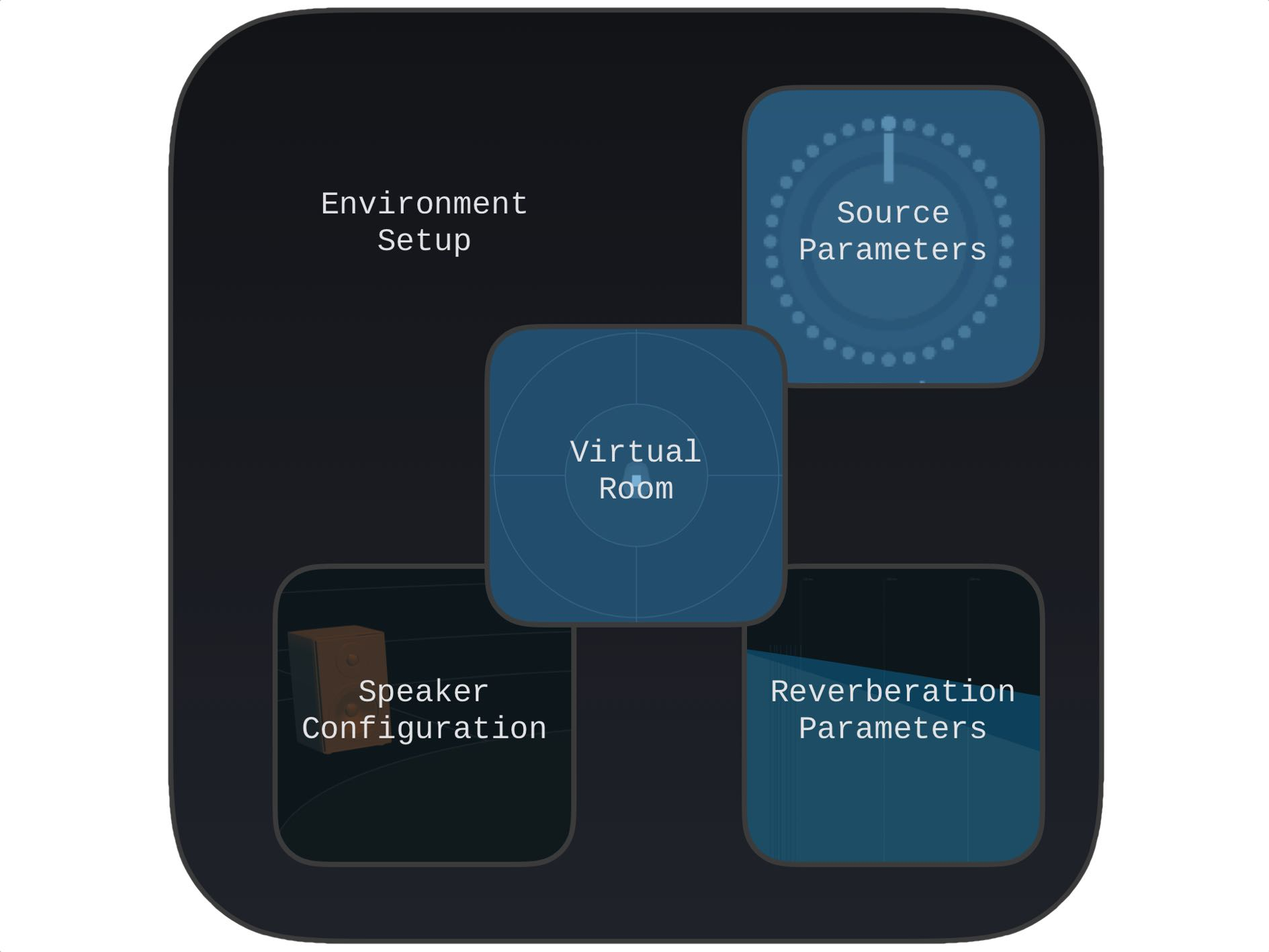
The SPAT Revolution interface is organized around pages and panels. Pages are containers that hold one or more panels, and panels are the views where you interact with your session. A vertical navigation bar on the right side of the window lets you switch between pages. For a detailed description of the interface layout and navigation, see User Interface.
Built-in pages
The Home Page is a simple hub that displays your previously opened sessions and gives you a user-friendly way to get started.
The Setup Page is the brain of your SPAT Revolution session. It’s where you route signals and address your mix to the loudspeaker array you’re using.
User-defined pages and panels
Beyond the two built-in pages, you can create as many user-defined pages as you need, each with its own custom arrangement of panels. The available panels are:
- Room — A 3D spatial view for each room in your session, where you position and move sources interactively.
- Snapshots — Create, re-order, recall, and update snapshots of your session state.
- Cues — Build show-control cue sequences with triggers and actions.
- Animations — Create LFO and trajectory animations to automate source movement.
- Timelines — Import audio files and record spatial automation directly within SPAT Revolution.
- Items — An alternate list view of all session elements.
Other tools
The Speaker Arrangement Editor is a comprehensive tool for creating and managing speaker layouts. Remember, this is a critical step in creating a convincing spatialization experience.
The Preferences Page is where you will find many of the application settings that allow you to tailor SPAT Revolution to your needs.
This section also covers the files and folder structure of the application, signal ballistics, and a few other topics.